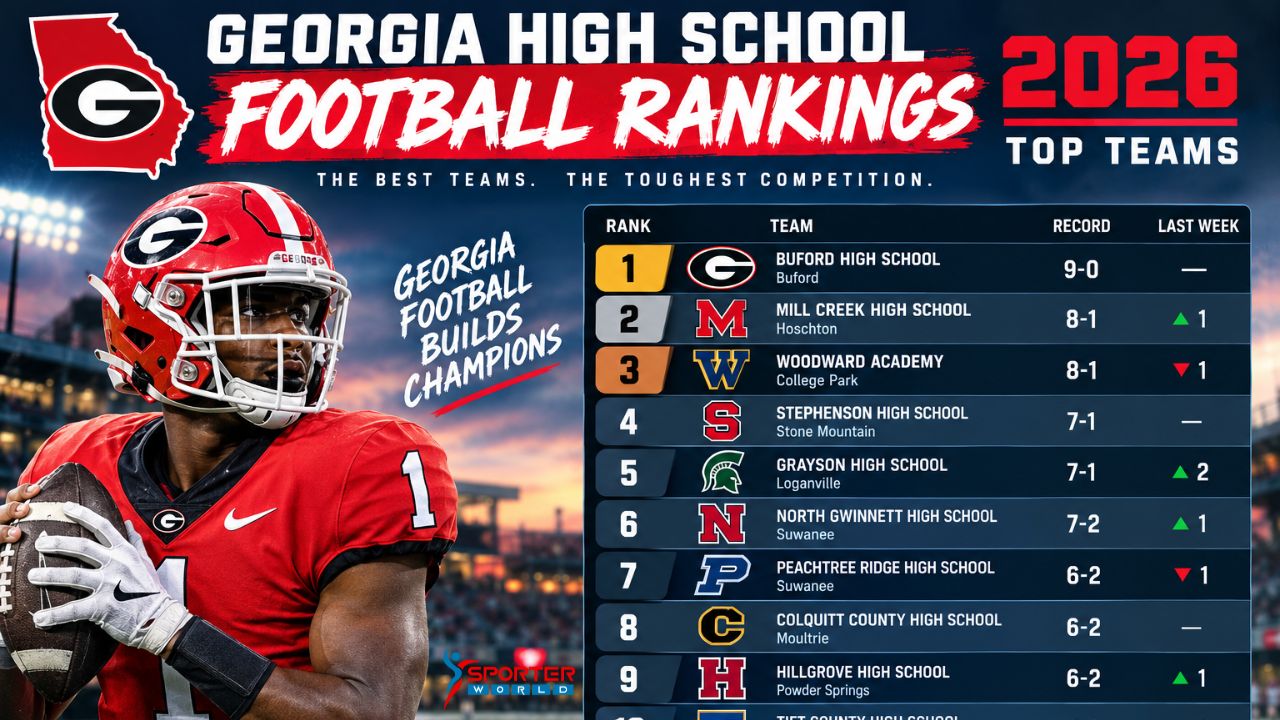
Georgia is one of the toughest states in the country for high school football, and Georgia high school football rankings are followed closely by fans, coaches, and college recruiters every fall. From metro Atlanta powerhouses to small-town programs in south Georgia, the state produces elite talent year after year. Understanding how these rankings work — and which teams sit at the top — helps you follow the season with real insight. This guide walks through Georgia’s classification system, top programs, and the best ways to track rankings from week one through the state championship.
Why Georgia High School Football Rankings Matter
Georgia consistently ranks among the top states for producing college and NFL talent, which makes its rankings especially important.
- Recruiting exposure: College scouts use rankings to spot top prospects early in the season.
- Playoff seeding: The Georgia High School Association (GHSA) uses region standings and records to set brackets.
- Community pride: Friday night football is a major event in many Georgia towns.
- National attention: Georgia regularly sends multiple five-star recruits to top college programs each year.

How Georgia High School Football Rankings Are Calculated
Rankings combine several factors rather than relying on wins alone.
- Win-loss record — the starting point for any ranking system.
- Strength of schedule — wins against tough opponents carry more weight.
- Head-to-head results — critical when ranked teams meet in the same classification.
- Point differential — margin of victory can signal team strength, within fair play limits.
- Media and coaches’ polls — analytics are often blended with expert opinion from local sports media.
Since Georgia uses a classification system, most rankings are grouped by class rather than shown as one statewide list.
Understanding Georgia’s Football Classifications
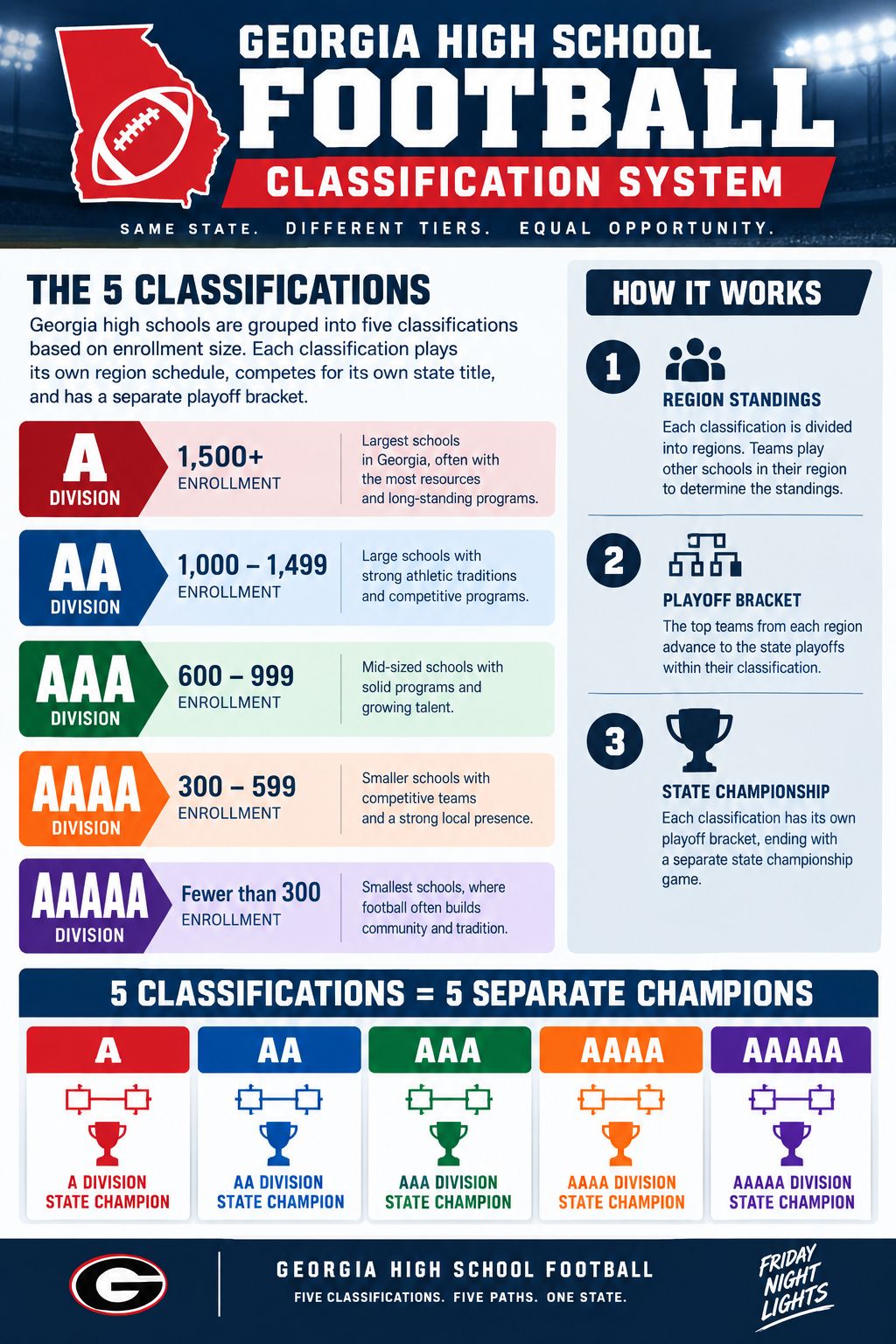
The GHSA splits schools into classes based on enrollment, which shapes how rankings are organized.
- Class 7A/6A (Largest schools): Mostly metro Atlanta schools with deep, talent-rich rosters.
- Class 5A/4A (Mid-size schools): Highly competitive programs that regularly produce Division I recruits.
- Class 3A/2A/1A (Smaller schools): Tight-knit communities where football is central to local identity, often with passionate fan support.
Top Georgia High School Football Programs to Watch
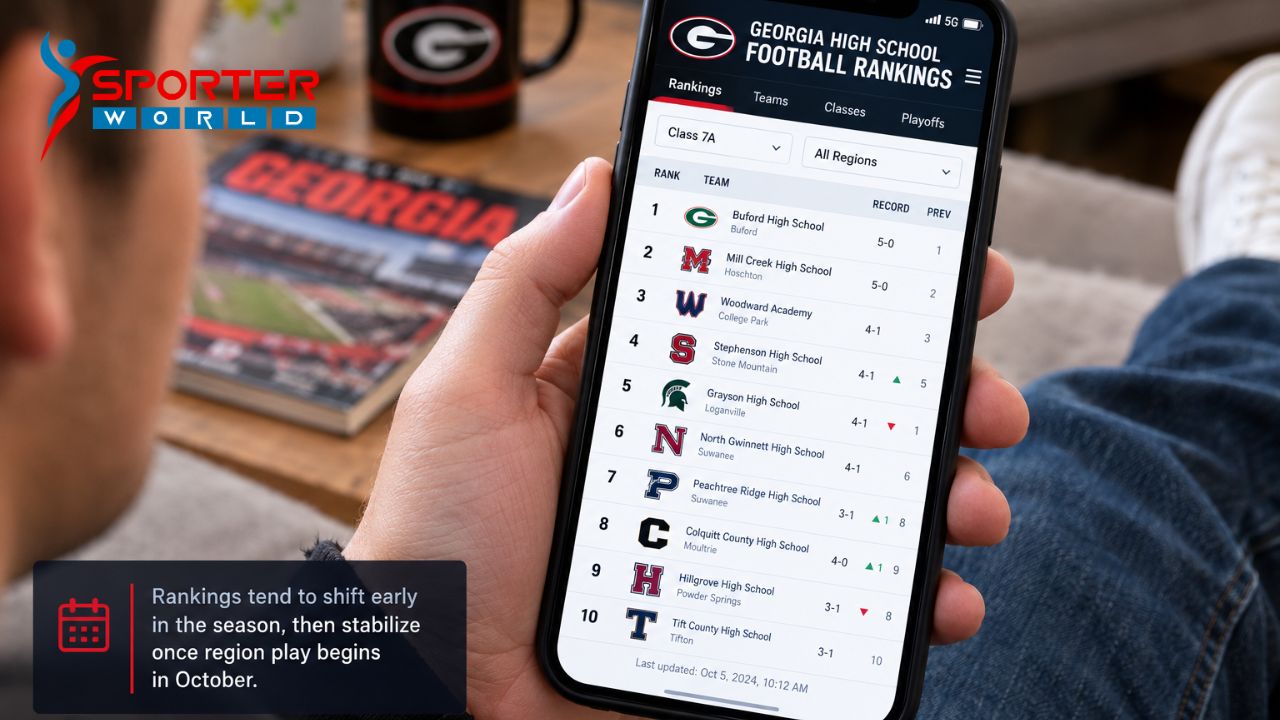
A handful of programs consistently appear near the top of Georgia high school football rankings.
- Buford High School — A dynasty known for sustained excellence and multiple state titles.
- Grayson High School (Loganville) — A national-caliber program producing top-tier recruits.
- Colquitt County (Moultrie) — A south Georgia powerhouse with a long winning tradition.
- Lowndes High School (Valdosta) — Part of a storied football region known for producing talent.
- Mill Creek High School (Hoschton) — A rising power with strong recent playoff performances.
These programs are frequently featured in national recruiting conversations alongside their strong in-state reputations.
How to Track Georgia High School Football Rankings This Season
Staying current on rankings throughout the season is simple with the right sources.
- GHSA official standings for classification-based results and playoff brackets.
- MaxPreps for computer-generated rankings using schedule strength data.
- Local sports media for weekly polls and detailed game recaps.
- Recruiting sites like 247Sports or Rivals for player-level rankings tied to top teams.
What Sets Georgia High School Football Apart
A few factors make Georgia especially competitive on the national stage.
- Deep talent pipeline: Georgia ranks among the top states per capita for Division I and NFL recruits.
- Strong regional rivalries: Long-standing matchups add intensity to weekly rankings shifts.
- Balanced competition: Both metro Atlanta and rural programs regularly produce state title contenders.
- Passionate fan base: Many Georgia communities treat Friday night football as a central social event.
Georgia high school football rankings shape more than just weekly bragging rights — they influence recruiting visibility, playoff seeding, and the statewide football conversation every fall. From metro Atlanta powers like Buford and Grayson to south Georgia programs like Colquitt County and Lowndes, the state consistently delivers some of the most competitive high school football in the country. As the season heads into October and November playoff pushes, expect the rankings to tighten and rivalries to intensify. Bookmark this page and check back weekly to stay ahead of the latest Georgia high school football rankings all season long.
Q: How many football classifications does Georgia have? A: The GHSA currently organizes schools into multiple classifications based on enrollment, each with its own separate rankings and playoff bracket.
Q: Who publishes official Georgia high school football rankings? A: The GHSA provides official standings, while sites like MaxPreps and regional sports media publish independent polls and computer-generated rankings.
Q: When do Georgia high school football playoffs start? A: Playoffs typically begin in early November after regular-season region play concludes, running through mid-December for state championships.
Q: Which Georgia high school produces the most college football recruits? A: Programs like Buford, Grayson, and Colquitt County consistently produce multiple Division I recruits each season, though this can vary year to year.
Q: Is metro Atlanta or south Georgia stronger in high school football? A: Both regions are highly competitive. Metro Atlanta schools often have larger rosters and more recruiting attention, while south Georgia programs like Colquitt County and Lowndes have long, storied winning traditions.